Anjouan Casino Licence in the UK: What It Means
 Available in GB
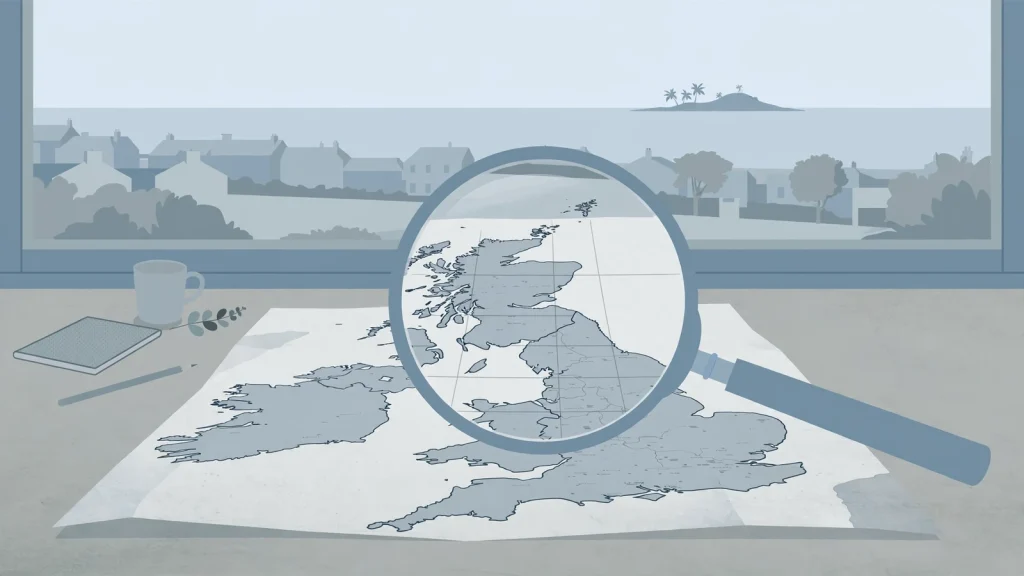
An Anjouan licence is issued by that jurisdiction and does not replace the UK Gambling Commission licence required to serve Great Britain.
Table of Contents
- What an Anjouan Licence Means for UK Players
- How Anjouan Licensing Works—and What It Leaves Out
- How to Check an Anjouan Licence and Handle a Complaint
- What Anjouan Online Casinos Mean for Player Protection
- Anjouan Casino Bonuses: Read the Wagering Terms First
- Anjouan Casino Sites: Payments and Getting Your Money Out
- New Anjouan Casinos: Expect Extra Checks and Payout Risks
- Anjouan Crypto Casinos and the UK Credit-Card Ban
- Anjouan Casino Reviews: What Happens When a Dispute Escalates
- Anjouan Offshore Casinos and Other Licensing Jurisdictions
- Guides
What an Anjouan Licence Means for UK Players
An Anjouan casino licence is permission issued by Anjouan, not by the UK Gambling Commission. It does not authorise a casino to offer gambling in Great Britain. If an operator takes customers in England, Scotland or Wales, it needs the relevant UK Gambling Commission licence, wherever the business itself is based.
That distinction matters more than the location shown on a website’s footer. A casino may describe itself as licensed in Anjouan, and that may refer to a licence from that jurisdiction. But it is not a substitute for UK permission. Anjouan’s own licence does not extend into the United Kingdom, and an operator cannot rely on it as authority to serve the British market.
The operator’s position
The Gambling Act 2005 is aimed at the businesses supplying gambling services into the UK market. For Great Britain, a remote operator must hold a UK Gambling Commission licence to serve customers there. The rule applies whether the company is based in Britain, Anjouan or somewhere else entirely.
If you’re considering an Anjouan-licensed casino for the UK market in 2026, check the available details carefully before deciding. The information below gives you one stated point to consider for each operator: its payout speed.
1. Jetsetspins
Payout speed: 1-3 business days Jetsetspins lists a payout speed of 1–3 business days. You can use this as one factor when assessing the information available.
2. EvoSpin
Payout speed: 1-3 business days EvoSpin lists a payout speed of 1–3 business days. You can take this stated timeframe into account when considering the operator.
3. NightLuck
Payout speed: 1-3 business days NightLuck lists a payout speed of 1–3 business days. This gives you a stated timeframe to consider for payouts.
4. Revery Play
Payout speed: 1-3 business days Revery Play lists a payout speed of 1–3 business days. You can factor this stated timeframe into your assessment.
5. WinBeast
Payout speed: 1-3 business days WinBeast lists a payout speed of 1–3 business days. This is the available payout detail for you to consider.
6. NightWin
Payout speed: 1-3 business days NightWin lists a payout speed of 1–3 business days. You can use this stated timeframe as one part of your evaluation.
7. x3bet
Payout speed: 1-3 business days x3bet lists a payout speed of 1–3 business days. This stated timeframe may help inform your assessment.
8. Amunbet
Payout speed: 1-3 business days Amunbet lists a payout speed of 1–3 business days. You can consider this payout detail when reviewing the operator.
9. Zombillion
Payout speed: 1-3 business days Zombillion lists a payout speed of 1–3 business days. This gives you a stated timeframe to take into account.
10. SpinFormula
Payout speed: 1-3 business days SpinFormula lists a payout speed of 1–3 business days. You can factor this information into your assessment.
So when a site accepts customers in Great Britain without the required UK licence, the issue is the operator’s position under the British regulatory system. Its Anjouan credentials do not change that. The distinction is not a technicality: a foreign licence and a British operating licence come from different authorities and grant different permissions.
This is why “licensed” on its own can be an incomplete description. You need to know which regulator issued the licence and what market that licence covers. An Anjouan casino licence may say something about the casino’s status in Anjouan; it does not tell you that the UK Gambling Commission has approved the operator to serve people in Great Britain. It has not, unless the operator also holds the relevant UK licence.
The UK’s rules apply to the supply of gambling services, rather than being a way to treat every player as the operator. That difference is easy to lose in online discussions, where “unlicensed” can sound as if the person placing a bet is committing an offence. Under UK law, players do not commit a criminal offence simply by gambling on an unlicensed site.
Nor does UK law expressly bar British citizens from using gambling services licensed overseas. That point should not be mistaken for approval of an Anjouan casino in Britain. The operator’s obligation to hold UK permission remains separate from the player’s position. Put simply: the operator may lack authority to serve the market, while the player is not criminally prosecuted just for using the site.
Casino Apps in the UK: Browser Play and Mobile Games
What this means in practice
If you are in Great Britain and come across an Anjouan online casino, treat its licence as a foreign credential, not as proof that it is authorised to operate here. The site may be accessible, and the existence of an Anjouan licence may be presented prominently, but neither fact turns it into a UK Gambling Commission-licensed casino.
That is the central point for British players considering casinos with an Anjouan gaming licence: the licence’s name does not settle the UK question. The relevant question is whether the operator holds the separate permission required to serve Great Britain. Without it, the site sits outside the UK Gambling Commission’s licensing system.
This distinction also helps keep two different claims apart. “The player is not committing a criminal offence” is not the same as “the casino is authorised to provide gambling in Great Britain.” One describes the player’s legal position; the other concerns the operator’s permission. Confusing them can make a foreign licence sound more protective or locally recognised than it is.
For readers in Northern Ireland, the legal framework is different: the Gambling Act 2005 applies in England, Wales and Scotland, but not Northern Ireland. The key point about an Anjouan licence still holds: it is not a UK Gambling Commission licence and does not itself authorise operation in the United Kingdom. If you are weighing up what a particular site may lawfully offer where you live, do not treat the foreign licence as the answer.
Attention: An Anjouan casino licence is not a substitute for UK permission and does not authorise an operator to serve the British market.
I would read the wording on a casino’s licence claim carefully, then separate it from any suggestion that the site is “available to UK players.” Availability is not the same as British regulatory approval. A site can be reachable from Britain while remaining outside the UKGC system, and an Anjouan casino licence does not bridge that gap.
That is the legal distinction in plain terms. Anjouan may license a casino within its own framework; the UK requires its own permission for operators serving Great Britain. A player’s lack of criminal liability does not confer that permission on the operator. Different questions, different answers.
How Anjouan Licensing Works—and What It Leaves Out
An Anjouan gaming licence is a form of regulatory oversight, but the label alone does not tell you how thoroughly a casino’s games or finances are checked. The practical question is what the framework requires the operator to do—and what it leaves to the operator’s own arrangements.
One important gap is independent testing of random number generators (RNGs). Anjouan’s framework does not mandate RNG testing, so the licence does not, by itself, establish that a casino’s games have undergone that form of independent assessment. Nor does the framework require audits. Those checks can matter when you are trying to understand how games are operated and whether the business is subject to external scrutiny. A licence label cannot fill in details that the framework does not require.
Casino Without a Swedish Licence: UK Rules Explained
Player funds are another key point. Anjouan’s rules do not require casinos to keep customer balances separate from business funds. That means an Anjouan-licensed casino does not guarantee segregation of your balance from the operator’s own money. If the business fails, there may be no ring-fenced pool of player funds waiting to be returned.
In that situation, players are unsecured creditors. In plain terms, you would be owed money alongside other creditors, rather than having a secured claim to a separately protected pot. Whether you recover anything would depend on what remains and how the operator’s failure is handled. The licence does not guarantee repayment.
That is the part easy to miss when the licence is presented as a badge of assurance. It may indicate that an operator has obtained authorisation under Anjouan’s framework, but it does not mean every useful safeguard is compulsory. In particular, it does not establish that games have passed mandated RNG testing, that the operator has undergone required audits, or that player balances are held separately.
When looking at casinos with an Anjouan licence, I would keep those distinctions in view. A casino might choose to arrange testing, audits or fund separation voluntarily, but the existence of the licence alone does not prove that it has done so. Look for clear, specific information about the operator’s arrangements rather than treating the licence wording as evidence of protections it does not require. If the information is vague, the uncertainty remains.
This is not a technical footnote. If a casino closes while holding customer balances, the difference between segregated funds and an unsecured claim could shape what happens next. And without mandated audits or game testing, the licence itself cannot answer every question about the operator’s controls or games.
Financial Risk
Anjouan rules do not require casinos to segregate customer balances from business funds, meaning you could become an unsecured creditor if the business fails.
So, when you see an Anjouan gaming licence, read it as one piece of information—not a promise that every familiar safeguard is in place. Check what the operator says it does voluntarily, and distinguish that from what the framework requires. The distinction matters.
How to Check an Anjouan Licence and Handle a Complaint
A licence badge in a casino’s footer is a starting point, not proof by itself. If you are checking an Anjouan casino licence, look for the operator’s entry in the public register maintained by Anjouan’s authority. Then compare the details there with the company named in the casino’s terms and conditions. A badge can be copied; a matching entry is more useful.
Check the exact legal company name, not just the casino’s trading name. The site may use one name for its brand and another for the business behind it. If the register names a different company from the terms, or the site does not identify its operator clearly, you cannot confidently link that casino to the entry you found. Pause rather than treating a similar-sounding name as a match.
Look at the entry’s expiry date as well. A listing is not enough if the licence period has passed. Check that the entry is current when you review it, and keep a note of what you found. A screenshot or saved copy can help if the page changes later. The check tells you whether the named company appears on the authority’s register and whether the listed licence is in date; it does not settle every question about the casino’s conduct.
Non-UK-Registered Casinos: Licences and Player Risks
That distinction matters. A register entry is not a guarantee that a withdrawal will be paid, that a disputed decision will be reversed, or that every term will be applied fairly. It also does not mean the authority will step in to resolve an individual player’s case. The licence check verifies a limited piece of information. It is not a verdict on the quality of the service.
If the register and site do not line up
Treat mismatches as reasons to ask for clarification, not as details to explain away. Check whether the company name in the casino’s terms is the one shown in the register. If the site uses a different brand, the operator should be able to explain the relationship between the brand and the registered company. Do not assume that a licence belonging to one business covers another simply because both names appear on the same site.
If you cannot find an entry, or the details are unclear, avoid relying on the footer badge alone. You can ask the operator to identify the legal company responsible for the account and point you to its Anjouan listing. Keep the reply. If the response does not resolve the mismatch, that is useful information in itself: you still have not verified that the casino’s operator matches the public record.
Checking a Licence
Verify the Register
Look for the operator’s entry in the public register maintained by Anjouan’s authority.
Compare Company Names
Match the legal company name in the register with the name listed in the casino’s terms and conditions.
Check the Date
Ensure the licence period has not passed and that the listing is currently in date.
A licence check is also time-sensitive. An entry you saw earlier may not reflect its status now, so revisit the register rather than relying on an old review or a saved promotional page. Reviews can help you notice questions worth checking, but they are not a substitute for the register or the operator’s own terms. Keep the source and date of your check alongside any later correspondence.
Making a complaint to the operator
If something goes wrong, put the complaint to the casino in writing through its stated complaints channel. Keep it specific: explain what happened, when it happened, what decision you are challenging and what outcome you are asking the operator to consider. Include relevant messages or account records, but keep copies rather than sending your only version of anything.
The Anjouan framework requires operators to respond to complaints within 30 calendar days. That is a response requirement, not a promise that the answer will favour you or that the issue will be resolved within that period. Save the date you submitted the complaint and any acknowledgement, then track the calendar days. If the operator replies, keep the full response and ask for clarification in writing if its reasoning is vague.
If the response does not address the issue, reply with the point that remains unresolved and refer to the evidence you have already supplied. Keep the exchange orderly and factual. A clear record makes it easier to see what the operator has considered and what it has not. Avoid relying on a phone conversation alone; if you speak to someone, follow up in writing so there is a record of what was discussed.
VPN-Friendly Casinos in the UK: Rules and Payments
The important limit is what happens next. Anjouan’s authority does not handle, mediate or adjudicate individual player complaints. So, after contacting the casino, you should not assume that the regulator will review the evidence, decide who is right or require the operator to change its decision. The operator’s required response does not create an authority-led appeal stage.
That leaves you with a practical distinction: use the register to check the licence details, and use the operator’s complaint process to put a dispute on record. Neither step should be mistaken for an independent ruling. Keep the documents together, note the dates, and be clear about what the check and complaint process can—and cannot—establish.
What Anjouan Online Casinos Mean for Player Protection
The protection you may expect from a UK-licensed casino does not automatically follow you to an Anjouan-licensed site. The practical difference is easiest to see in everyday controls: tools for limiting play, the ability to exclude yourself, and the rules governing how your personal information is handled.
Anjouan-licensed casinos are not required to connect to GAMSTOP. If you have registered with that service, it will not block you from accessing a casino outside its scheme. That distinction matters: self-exclusion from participating UK sites is not a universal block on gambling websites. A site being available to you does not mean it has checked whether you meant to take a break.
I would not treat a promise on a casino’s own pages as equivalent to an external exclusion scheme. Look for what controls the operator says it offers, how they work and whether they can be reversed or changed. The key point is that you should not assume a tool is present, effective or governed by UK requirements simply because the site accepts your account.
Anjouan-licensed casinos are not required to connect to GAMSTOP, so registering with that service will not block you from accessing these sites.
Limits and time-outs are not a given
UKGC-regulated operators must provide mandatory responsible-gambling tools. When you play outside that system, you lose access to those required protections. Non-UK-regulated casinos may have less stringent responsible-gambling rules, and Anjouan operators do not have to integrate GAMSTOP.
That does not prove that every individual site has no limits or time-outs at all. It does mean the safeguards you see can vary, and you should not rely on the UK system to impose them. A deposit limit, a break from play or a self-exclusion option may depend on the operator’s own arrangements rather than a comparable UK-wide requirement.
This is where people can get caught out: a control that appears on a settings page may not carry the same weight as a mandatory safeguard. Check what the site says happens when you activate it, whether the setting is described as temporary or lasting, and whether you can change it yourself. If the terms are unclear, do not assume the most protective interpretation.
Short version: check the control, not the label.
Your information is handled under a different standard
Data protection is another area where the regulatory framework may differ. Non-UK-regulated casinos may be subject to less stringent data-protection rules than UKGC-licensed operators. That is not the same as saying every Anjouan casino mishandles information; it means you should not assume UK-level requirements apply in the same way.
Online Casino With No Sister Sites in the UK: What It Means
Before opening an account, read the site’s privacy information and note what it says about the information it collects, how it uses it and who it may share it with. Pay attention to what you are asked to provide and whether the explanation is clear. If you cannot understand the policy, or it does not explain the basics, handing over personal details becomes a decision made in the dark.
The same caution applies to identity documents and account details. A casino may ask for information as part of its own processes, but that does not tell you by itself how securely the material is stored or how long it is retained. Do not send more information than the operator requests, and do not assume that an account being accepted is proof that the site follows UK data rules.
Support routes are narrower
Protection also includes knowing where you can turn for help. When you gamble at a non-UK-regulated casino, you do not have access to the UK’s Financial Ombudsman Service for that relationship, and UK-mandated responsible-gambling tools are not available as a fallback. That can leave you relying more heavily on the operator’s own procedures and the options offered where it is based.
This is separate from whether a site has a support team or publishes policies. Those features do not recreate the protections attached to the UK system. Nor does a familiar-looking website change which safeguards apply. I would keep that distinction in mind before treating an Anjouan online casino as if it were simply another UK site with a different logo.
Do
- Find safer-gambling controls in advance
- Read the privacy policy before opening an account
- Set your own limits before play starts
Don’t
- Rely on GAMSTOP to block access to Anjouan sites
- Assume UK-mandated safeguards are present
- Send more information than the operator requests
If you are already using one, take a moment to find its safer-gambling controls and privacy policy before you need them. Decide in advance what limits you want for yourself, rather than waiting until play is underway. If you need GAMSTOP to prevent access, an Anjouan casino is not covered by that scheme; do not rely on registration there to do the job.
The basic rule is straightforward: protections you know from UK-licensed sites may not travel with you. Check what the individual operator actually provides, but remember that its own tools are not a substitute for UK-mandated safeguards.
Anjouan Casino Bonuses: Read the Wagering Terms First
A large welcome offer can look generous until you see what you must do before withdrawing any winnings. The headline tells you the size of the bonus, not how much qualifying play is required, which funds count towards it, or whether winnings are capped. I’d read the terms before treating any offer as extra value.
Specialist reviews of offshore welcome offers have reported wagering requirements of 35x or more. That figure is not a rule for every Anjouan casino bonus; the terms vary by operator and promotion. More importantly, the multiplier alone does not tell you the real workload. You need to find the amount it applies to.
USA Casinos for UK Players: Licensing and Risks
What does the wagering requirement apply to?
A requirement described as 40x might apply to the bonus alone, the deposit and bonus combined, or the bonus and free spins together, depending on the offer. Specialist reviews have reported each of these structures. The same multiplier can therefore mean very different things in practice.
Check the wording for the calculation base. If it says the deposit and bonus are combined, the amount you must wager is calculated from both, not just the promotional credit. If it applies to the bonus alone, the deposit may be treated differently. And if free spins are included in the same requirement, their winnings may add to the qualifying amount.
Don’t stop at the number beside “wagering”. Look for which games count, whether different games contribute differently, and when the requirement expires. The bonus terms should explain these points. If the wording is unclear, assume you may not be able to withdraw bonus-related winnings until the operator’s conditions are met. A tidy headline can hide messy arithmetic.
Free spins have their own strings
Free spins are not necessarily cash-equivalent credit. The winnings may carry a separate wagering condition, a cap on the amount you can withdraw, and a short period in which to use the spins.
Specialist reviews have reported free-spin winnings subject to wagering requirements of 30–50 times those winnings, with withdrawal caps of £5–£50. These are reported terms, not fixed conditions across every offer. Check the promotion itself: a cap can limit what you keep even if the spins produce a larger win.
Common Free Spin Restrictions
Specialist reviews have reported wagering requirements of 30–50 times the winnings, withdrawal caps ranging from £5 to £50, and short expiry windows of 24–72 hours.
Those reviews have also reported free-spin packages expiring within 24–72 hours. Again, the actual deadline depends on the offer. Check when the clock starts, whether every spin must be used by the stated expiry, and whether the resulting winnings have a separate deadline or wagering condition. A free-spin offer you cannot use in time is not much of an offer.
A quick terms check
Before opting in, I’d look for four things: the wagering multiplier, the amount it applies to, any game restrictions, and the expiry or withdrawal cap. Then check whether the bonus is automatic or optional and whether accepting it changes the conditions attached to your account. Don’t rely on a banner or short promotional summary when the full terms are available.
If the operator’s wording leaves the calculation base or withdrawal conditions uncertain, that uncertainty matters. Keep a copy of the offer terms shown when you claim it; promotions can change, and a saved record helps you remember what you accepted. The useful comparison is not which Anjouan casino has the biggest advertised bonus, but which offer has conditions you understand and are willing to meet.
One practical rule: calculate the requirement from the stated base before you deposit. If the terms don’t make that base clear, pause rather than guessing.
Anjouan Casino Sites: Payments and Getting Your Money Out
Anjouan casino sites may offer several ways to put money in, but a payment logo on the cashier tells you little about how easily you can take winnings out. Non-UK-regulated casinos may set more flexible deposit and withdrawal policies than UK-licensed operators, and that can mean fewer restrictions or a quicker payout. It is not a promise that every method works both ways.
Highest-Paying Online Casinos in the UK: RTP Guide
Offshore sites may accept cards, e-wallets and bank transfers. A specialist review has also reported deposits charged to a mobile phone bill or taken from a prepaid balance. Treat that as a method reported for some operators, not a standard feature across the market. Before depositing, check the cashier and the withdrawal terms for the exact method you plan to use.
Payout estimates are not consistent. Some descriptions put withdrawals at 24 hours to 5 business days, while other accounts say a cash-out can take three or four weeks. That gap matters: with no regulatory clock to enforce a stated turnaround, an advertised estimate may not give you much leverage if a payment stalls.
Limits can affect the total just as much as processing time. Some specialist casino reviews report daily, weekly or monthly withdrawal caps at particular sites. Where a cap applies, a large win may have to be paid in instalments rather than as one transfer. Check whether the limit is per account or per payment method, and whether it applies to winnings as well as deposits; the terms should make this clear.
I would check the withdrawal rules before sending money, not after a win. Confirm the available payout methods, any caps and the stated processing window, then keep a copy of the terms you relied on. A deposit going through is only the first half of the transaction.
Payout Verification
- Confirm available payout methods
- Check for daily, weekly, or monthly withdrawal caps
- Review the stated processing window for withdrawals
- Save a copy of the withdrawal terms
New Anjouan Casinos: Expect Extra Checks and Payout Risks
A newly opened Anjouan casino has less of a track record for you to assess. That does not prove it will mishandle a withdrawal, but it does mean you have little history to judge how the operator deals with delays, account checks or a large win. Treat claims about quick cash-outs as claims, not a record.
Read the withdrawal terms before depositing. Look for limits that could split a large payout into instalments, and check whether the operator can change its verification requirements before releasing funds. A specialist review has reported daily, weekly or monthly withdrawal caps at some non-UK-regulated casinos; that is a possibility to check for, not a standard condition at every new site.
Identity checks are normal in gambling, but the steps can become more demanding when you request a withdrawal. A specialist review has also reported operators asking for notarised documents or a video call. Those measures may be presented as verification, yet they can make it harder to complete a payout, particularly if the requirements were not clear when you signed up. Keep copies of the terms and any messages about your account.
UK Casino No-ID Verification: What to Expect
If a site is new, check whether its withdrawal rules explain what happens when documents are rejected, what could pause a payout, and whether a cap applies to each withdrawal. Do not assume that being able to deposit means you can withdraw by the same route or on the same timetable. A pending withdrawal can be a nuisance; an unclear process is worse.
Before using any non-UK-regulated casino, check the laws that apply to you and understand the implications of playing there. In Great Britain, a non-UK-regulated operator does not have a UK Gambling Commission licence, and you cannot take an unresolved payout problem to the UK regulator. Keep your own records, and avoid depositing money you may need back quickly.
Anjouan Crypto Casinos and the UK Credit-Card Ban
Some Anjouan-licensed casinos accept cryptocurrency, sometimes using alternative payment processors to handle transactions. That can make the cashier look different from a standard card checkout, but the key point is what funds the gambling account: crypto payments can bypass the UK restriction on credit-card-funded gambling.
That is a payment distinction, not a change in the operator’s status. Paying with cryptocurrency does not give an Anjouan casino a UK Gambling Commission licence or make it authorised to serve customers in Great Britain. If you are considering an Anjouan casino that accepts UK players, check the legal implications for yourself rather than treating a crypto option as a workaround that makes the site regulated.
There is another practical wrinkle: “paying with crypto” does not always mean the whole journey is separate from traditional finance. A processor may be involved, and the casino’s available methods can vary. The fact that a cashier lists a cryptocurrency tells you only that the operator says it accepts that payment route. It does not establish who processes the transaction or what protections apply if something goes wrong.
Using cryptocurrency to fund gambling may bypass the UK restriction on credit cards, but it does not grant the casino a UK Gambling Commission licence.
I would also avoid assuming that a crypto deposit will be simple to reverse or recover. A payment method is not a guarantee of a refund, and the cryptocurrency option does not alter the terms between you and the casino. Read those terms before sending funds, and make sure you understand the value you are transferring and the consequences of using a non-UK-regulated casino.
Keep the distinction plain: crypto may avoid using a credit card to fund gambling, but it does not remove the wider risks of playing outside the UK system. The route changes. The licence does not.
Anjouan Casino Reviews: What Happens When a Dispute Escalates
Reviews can help you spot how other players describe a casino’s service, but they are not a decision on your case. A complaint posted online may alert you to a recurring disagreement; it cannot require an operator to change its position or return money.
Casino Guides: Licensing, Access and Verification
If you cannot resolve an issue directly with an Anjouan-licensed casino, the next step is not an independent adjudicator comparable to the alternative dispute resolution services available through the UK Gambling Commission system. These casinos do not provide that equivalent route. That matters when you and the operator disagree about how its terms apply: there is no comparable independent service to assess both sides and issue a decision.
Nor should you treat a review site, forum or other players’ comments as a regulator. They may offer context, but they cannot settle your individual dispute. The UK Gambling Commission is not a fallback complaints body for a customer of a non-UK-regulated casino, either. You should not expect it to intervene in a disagreement with an Anjouan operator.
Keep your own account of what happened. Save relevant messages, screenshots and the operator’s explanation, and make your complaint to the casino in writing so the issue is clear. If you later describe the experience publicly, distinguish what you can document from what you believe happened. A review can inform other players, but it does not replace a formal resolution process.
That leaves a practical limit: if the operator maintains its position and direct contact goes nowhere, your options are narrower than they would be with a UKGC-licensed casino. Read reviews as warning signs, not as evidence that someone else can secure an outcome for you. No independent referee.
Anjouan Offshore Casinos and Other Licensing Jurisdictions
Anjouan is one of several places associated with licensing non-UK-regulated casinos. Malta, Curaçao and Gibraltar also appear in this landscape. The names can make a site sound closer to home or more familiar, but they identify a licensing jurisdiction, not permission to serve customers in Great Britain.
The useful distinction is straightforward: a non-UK-regulated casino operates without oversight from the UK Gambling Commission. A licence from Anjouan, Malta, Curaçao or Gibraltar does not replace the UKGC licence required for an operator serving the British market. So if you see one of these jurisdictions named, do not read it as proof that the site is authorised to offer gambling here.
Curacao Casino Licence in the UK: What It Means
That does not make the jurisdictions interchangeable. It simply means the country or territory named on a casino’s licence is not the same thing as UK regulation. For a player, the label tells you where the operator claims its licensing comes from; it does not establish that the operator has UKGC oversight.
Anjouan may be the name you have encountered most often while comparing non-UK-regulated casinos, but it is not the only offshore licensing option. The broader picture includes established names such as Malta and Gibraltar, as well as Curaçao. In each case, keep the jurisdiction separate from the question of whether the casino is licensed for Great Britain.
I would treat the licence location as context, not a recommendation. A familiar jurisdiction name does not by itself settle whether a particular casino can legally serve British customers, nor does it turn a non-UK-regulated casino into a UK-regulated one. Those are different things.
What happens if I have a dispute with an Anjouan-licensed casino as a UK player?
You can complain to the casino, which must respond within 30 calendar days, but Anjouan does not mediate or decide player complaints. You also do not have access to an independent dispute resolution route comparable to UKGC-approved ADR.
What payment methods work best at non-UK-regulated casino sites?
These sites may accept e-wallets, bank transfers, credit cards and cryptocurrencies, sometimes through alternative processors; some also allow mobile-bill or prepaid-balance payments. Check the casino’s available methods and withdrawal terms before depositing, as processing times and limits vary.
Are Anjouan-licensed casinos safe and fair?
An Anjouan licence does not guarantee that a casino’s games have had independent RNG testing or that its finances have been audited. Player funds are not required to be kept separate, so the licence alone does not establish that a casino is safe or fair.
Are Anjouan casinos connected to the GamStop self-exclusion scheme?
No. Anjouan-licensed casinos are not part of GamStop, the UK Gambling Commission’s self-exclusion scheme.
Can I complain to the Anjouan regulator if a casino won’t pay me?
No. The Anjouan authority does not handle or adjudicate player complaints. You can complain to the casino, which must respond within 30 calendar days, but there is no comparable independent ADR route.
How do casinos outside GamStop operate?
They operate outside the UK Gambling Commission’s licensing and self-exclusion system, often under licences from other jurisdictions. An Anjouan licence does not authorise an operator to serve customers in Great Britain; operators doing so need a UK Gambling Commission licence.
Guides

Casino Apps in the UK: Browser Play and Mobile Games
Compare dedicated apps with browser play, and understand mobile games, payments and bonus terms before...

Foreign Casinos for UK Players: What to Know
A practical guide to licensing, payments, bonuses and safeguards at overseas gambling sites that accept...

International Casinos for UK Players: Rules and Risks
The guide explains how licensing status affects UK players and where bonus, payment and withdrawal...

Mobile casino pay by phone credit in the UK
Phone-credit deposits use the mobile service linked to a number, with the network authorising the...

Best Offshore Casino Sites 2026: UK Rules Explained
A practical guide to licences, payments, checks and terms—and why an offshore licence is not...

Offshore casinos for UK players: rules and risks
A practical look at licensing, bonus conditions, crypto transfers and withdrawals when overseas casinos accept...

British Casinos Not on GamStop: What to Know
The guide explains GamStop’s scope and exclusion periods, and outlines checks on casino licensing, bonus...

UK Casino No-ID Verification: What to Expect
A smooth sign-up is not proof that age and identity checks are complete or that...

Casino Sites Not Registered with GamStop in the UK
GamStop applies to UKGC-licensed operators, while sites outside the scheme may not provide the same...

No-ID Verification Casino Withdrawals in the UK
A low-friction signup does not remove UK age and identity checks or guarantee that a...

Casino Without a Swedish Licence: UK Rules Explained
A foreign gambling licence is not a substitute for UKGC authorisation, and the difference affects...

Casinos That Bypass GamStop: What to Know
The guide explains GamStop’s reach, offshore licensing, player protections and the practical risks of payments...

Curacao Casino Licence in the UK: What It Means
A Curacao licence claim does not mean a casino is regulated by the UK Gambling...

Gibraltar Casino Licence and UK Player Protections
A Gibraltar base does not establish UK oversight; licensing, dispute options, payments and withdrawal terms...

Merkur Casino Online UK: What to Check Before Playing
A game label can identify a slot, but it does not establish a casino’s operator,...

Most Trustworthy Online Casinos in the UK: How to Check
A practical way to assess UK casino authorisation alongside the checks and customer protections that...

No Account Casino UK: How It Works
The label can mean a quicker start, but it does not guarantee anonymous play or...

Non-Gamban Casinos in the UK: What the Term Means
GAMSTOP covers participating licensed gambling sites, while Gamban is a separate system; the terms do...

Non-GamStop Curaçao Casino Sites: UK Checks
A Curaçao label alone does not establish UK authorisation, GamStop status, or the licence and...

Non-GamStop European Casinos: UK Self-Exclusion
A European address does not establish whether a site is covered by GAMSTOP or permitted...
Non-UK Licence Casinos: How Offshore Regulation Works
A licence comes from a specific authority, and an overseas licence does not place a...

Non-UK-Registered Casinos: Licences and Player Risks
Company registration and gambling regulation can point to different jurisdictions, affecting oversight and the practical...
Non-UK regulated casinos: UK rules explained
A guide to UKGC licensing, overseas jurisdictions, player protections and the practical differences around payments...

Non-UKGC Licensed Casinos: Rules and Risks
These sites operate outside the UK Gambling Commission’s system, even when licensed by another jurisdiction....

Online Casino No Registration UK: What It Really Means
A clear look at browser access, account claims and the verification step that still applies...

Online casino Malta MGA licence and UK rules
The guide separates Malta regulation from Great Britain’s licensing rules and explains what that distinction...

Online Casino With No Sister Sites in the UK: What It Means
Sister-site links can come from shared ownership, casino technology, or both, while familiar features alone...

Online Slots Not on GamStop: What the Label Means
GamStop participation applies to UKGC-licensed operators, while the label describes a casino’s checks—not an individual...

Safe Online Casinos in the UK: Checks Before Play
A practical way to assess account controls, licensing, payments and game terms before committing money...

Highest-Paying Online Casinos in the UK: RTP Guide
RTP describes theoretical returns over time, while actual results vary and game returns are separate...

Trusted Casinos Not on GamStop in the UK
Understand what casino labels and licence details show, and how terms, payments and safeguards can...

Trusted UK Casino: Licence Checks and Key Terms
A practical guide to licensing, site identity, promotions, verification and payment checks for real-money casino...

USA Casinos for UK Players: Licensing and Risks
This guide explains how offshore casinos differ from UKGC-regulated sites, and what licensing, payments, bonuses...

VPN-Friendly Casinos in the UK: Rules and Payments
A VPN can mask an original IP address, but it does not alter a casino’s...