Non-UK Licence Casinos: How Offshore Regulation Works
 Available in GB
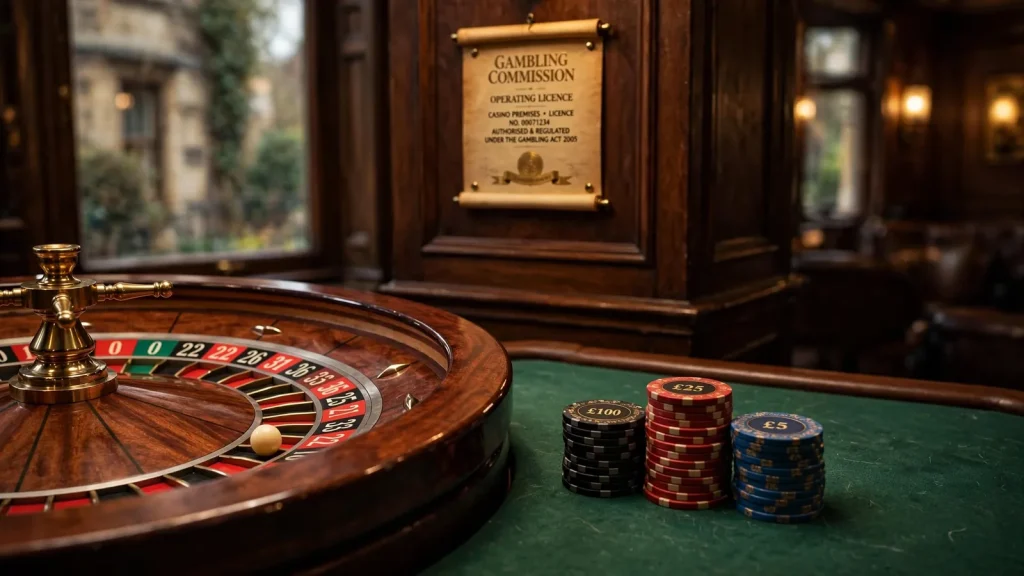
A licence comes from a specific authority, and an overseas licence does not place a casino under UKGC supervision.
Table of Contents
- What a Non-UK Licence Actually Means
- How Offshore Casino Licences Work Across Jurisdictions
- What Makes a Casino Licence Worth Trusting?
- UK-Licensed Casinos: What the Licence Covers
- The Legal Position for UK Players Using Offshore Casinos
- Curaçao Casinos and Crypto Payments: Read the Terms Carefully
- UKGC Oversight and What Happens When You Complain
- MGA-Licensed Casinos: What the Malta Connection Tells You
- Casinos Without a UK Licence: Protections You May Miss
- Looking at a New Casino? Check the Licence, Not the Launch Date
- Guides
What a Non-UK Licence Actually Means
A non-UK-regulated casino is an online gambling site that operates without oversight from the UK Gambling Commission (UKGC). It may still hold a casino licence, but that licence comes from a regulator outside the UKGC system. The two things are easy to blur together when a site describes itself as “licensed”. They are not the same.
A licence is tied to the authority that issued it. So when a casino says it is licensed, the useful next question is: licensed by whom? Non-UK-regulated casinos are typically licensed in places such as Malta, Curaçao, Gibraltar or Anjouan. That tells you the site has a connection to another licensing jurisdiction; it does not mean the UKGC supervises it.
I find it helps to separate two ideas: a casino can have a licence, and a casino can be regulated by the UKGC. The first does not establish the second. “Licensed” on its own is an incomplete description, rather like saying a document is official without naming the office that issued it.
If you are considering a casino that may not hold a UK licence, check its terms and the rules that apply to you before signing up. This list gives you one concrete detail to consider: the stated payout speed for each operator.
1. Jetsetspins
Payout speed: 1-3 business days Jetsetspins lists a payout speed of 1–3 business days, which gives you a stated timeframe to bear in mind.
2. EvoSpin
Payout speed: 1-3 business days EvoSpin lists payouts as taking 1–3 business days. You can use that stated speed as one factor when assessing the operator.
3. NightLuck
Payout speed: 1-3 business days NightLuck’s listed payout speed is 1–3 business days, giving you a specific timeframe to consider.
4. Revery Play
Payout speed: 1-3 business days Revery Play lists a payout speed of 1–3 business days. This is the available practical detail for you to consider.
5. WinBeast
Payout speed: 1-3 business days WinBeast lists payouts as taking 1–3 business days, a stated timeframe you may want to keep in mind.
6. NightWin
Payout speed: 1-3 business days NightWin’s listed payout speed is 1–3 business days. You can factor this stated timeframe into your decision.
7. x3bet
Payout speed: 1-3 business days x3bet lists a payout speed of 1–3 business days, giving you one concrete point of reference.
8. Amunbet
Payout speed: 1-3 business days Amunbet lists payouts as taking 1–3 business days. That stated speed is the available detail for you to weigh.
9. Zombillion
Payout speed: 1-3 business days Zombillion’s listed payout speed is 1–3 business days, which provides you with a stated timeframe to consider.
10. SpinFormula
Payout speed: 1-3 business days SpinFormula lists a payout speed of 1–3 business days. You can treat this as a stated timeframe, rather than a guarantee.
That distinction matters because a foreign licence and a UK casino licence are not interchangeable labels. The regulator behind the licence is the body associated with that authorisation. A non-UK-regulated casino sits outside UKGC oversight even if it identifies a licensing authority elsewhere. In other words, the word “licence” does not tell you which regulator is involved until you know its source.
You may see several phrases used for these sites: non-UK-regulated casinos, non-UK-licensed casinos, or casinos licensed in another jurisdiction. They point towards a similar distinction, but the clearest question is whether the operator is overseen by the UKGC. A foreign licence may explain how the casino presents its regulatory status; it does not turn that status into UKGC oversight.
This is also why the phrase “licensed online casino” needs context. It could refer to a casino licensed by an overseas authority, or to one authorised by the UKGC. The same broad word describes different regulatory arrangements. If you are reading a site’s own description, look for the named regulator rather than relying on a badge or a short claim that it is licensed.
A casino licence is not a universal certificate that carries the same meaning wherever it appears. The authority named on it matters. Malta, Curaçao, Gibraltar and Anjouan are among the jurisdictions commonly associated with non-UK-regulated casinos, but naming one of them does not answer the separate question of UKGC oversight. That is the basic distinction to keep in view when comparing the terms used by different sites.
The word “offshore” is often used casually for an operator licensed outside the UK. It describes the licensing connection, not a UKGC licence under another name. Likewise, a casino may be available to view online and still sit outside the UK regulator’s system. Availability and regulatory oversight are separate matters; one does not prove the other.
Casino Guides: Licensing, Access and Verification
When you encounter a claim about a casino licence, read it as a statement about a particular regulator, not as a general stamp of approval. If the named authority is outside the UKGC, you are looking at a non-UK-regulated casino. That simple definition gives the rest of the terminology some order: the site may have a licence, but the licence does not come from the UK regulator.
So, when someone says “licensed”, I would not stop there. Find the regulator the site names, then distinguish that authority from the UKGC. That is all the term “non-UK-regulated” is doing: it tells you which oversight is absent, without pretending that every licence issued elsewhere is identical. A small distinction, with real weight.
How Offshore Casino Licences Work Across Jurisdictions
A licence has a place attached to it, and that place is more than a line in a website footer. Non-UK-regulated casinos may be licensed in Malta, Curaçao, Gibraltar or Anjouan. Each name points to a different licensing authority and regulatory framework; the label alone does not tell you what checks a particular operator has passed or what recourse is available if a dispute arises.
That is why “licensed” is not a complete description. A Malta-licensed online casino and a casino licensed in Anjouan are not operating under the same authority simply because both display a licence. Nor does a licence from any of these jurisdictions mean the casino is overseen by the UK Gambling Commission. The regulator named on the licence is the starting point for understanding where the operator is accountable.
Jurisdiction Basics
A licence is tied to the authority that issued it; a foreign licence does not establish UKGC oversight, and a licence from one jurisdiction (e.g., Malta) does not mean the same rules apply as in another (e.g., Anjouan).
What the jurisdiction tells you
The licensing location can help you identify which authority the operator says supervises it. It also gives you a useful way to organise the information you find: first establish the named jurisdiction, then check that the licence claim belongs to the operator you are looking at. A casino’s brand and the legal company operating it may not have the same name, so read the details together rather than relying on a logo.
The distinction matters because a licence is not a universal passport. It does not automatically mean an operator is permitted to serve customers in every country, or that its rules match those in Britain. For a UK reader, the main practical point is simple: a licence issued elsewhere remains a licence from elsewhere. It should not be mistaken for UKGC oversight.
A jurisdiction name can also appear in several forms across a site: in its footer, terms, account pages or licence information. If those details are hard to find, inconsistent or too vague to connect to the company behind the casino, you have not yet established who is responsible. A badge is easy to display. The operator’s identity is the detail worth checking.
How to check the claim
When you want to know whether an online casino is licensed, look for the licensing authority and the legal operator’s name, not just the casino’s trading name. Then compare those details with the authority’s public information where available. Check that the company and the licence information correspond; if you cannot make that connection, treat the claim as unconfirmed rather than filling in the gaps yourself.
Non-Gamban Casinos in the UK: What the Term Means
This is also the sensible answer to how to choose a licensed online casino: begin with the jurisdiction, but do not stop there. The place named on the licence tells you which framework to investigate. It does not, by itself, establish that the casino offers the protections you expect or that every claim on its website is accurate. Those are separate questions.
People sometimes ask how to get a casino licence. For an operator, that means applying to a licensing authority under its rules; it is not something a player can infer from a casino’s branding. The requirements and process depend on the jurisdiction. I would not treat a polished “licensed” stamp as proof of the underlying application or its scope.
Do not mix up the lists
“How many licensed online casinos are in the UK?” depends on what is being counted and which regulator’s register is being used. A list of casinos licensed in Malta, for instance, is not a list of UK-licensed operators. Likewise, a site can describe itself as international while naming a specific overseas authority. Keep the regulator and the market separate in your notes.
That small habit prevents a common muddle: seeing a recognisable jurisdiction and assuming it means the same thing everywhere. It does not. The name on the licence tells you where to look next, not what conclusion to reach. Check the operator behind the brand, identify the authority, and keep the licence’s location clear. Then you can judge the casino on the right terms—not on a badge alone.
Checking Licence Claims
Identify the Operator
Look for the legal company name and the licensing authority in the footer or terms, rather than relying on a brand logo.
Verify the Authority
Check the claim against the licensing authority’s public information to ensure the company and licence details correspond.
Confirm Jurisdiction
Establish which specific regulatory framework applies, as a foreign licence is not a substitute for UKGC oversight.
What Makes a Casino Licence Worth Trusting?
A licence is useful only when you know who issued it and what oversight comes with it. The word “licensed” on a casino’s website is not, by itself, a measure of how well the operator is supervised or what protections you can rely on. I look at the regulator behind the claim, then at what that regulator’s rules mean for a player.
For customers in Great Britain, the UK Gambling Commission is the practical reference point. An operator serving this market needs a UKGC licence even if its company is based elsewhere. That makes the licence more than a badge: it indicates that the operator is subject to the UK’s regulatory framework. It does not mean every experience will be trouble-free, but it gives you a clearer basis for understanding the protections attached to the service.
A foreign licence is a different proposition. It may show that an operator has some form of oversight, but it does not automatically put the casino under UKGC supervision or give you the same safeguards. The important question is not simply whether a licence exists; it is what the regulator requires of the operator and what support is available to you if those requirements are not met.
Look beyond the badge
When you assess a casino’s licence, separate three things: the regulator named, the rules the operator must follow, and the protections those rules give you. A licence label answers only the first question unless you also understand the framework behind it. Treat broad claims about being “fully licensed” as a starting point, not a complete explanation.
Casino Without a Swedish Licence: UK Rules Explained
The UKGC offers a useful comparison because its framework includes mandatory responsible-gambling tools. Those tools matter in practice, not just in policy language. If you are comparing a UKGC-licensed casino with a non-UK-regulated casino, check whether the protections you expect are actually available. Non-UK-regulated operators may apply looser standards to responsible gambling and data protection. The difference can affect both how you manage play and how your personal information is handled.
I would also avoid treating a licence as a blanket promise about the operator’s day-to-day conduct. It does not tell you that every term will suit you, or that a particular account decision will go your way. Read the casino’s own terms alongside the licensing information. A regulator’s name is not a substitute for understanding what you are agreeing to.
Consider the protection you would give up
The comparison is especially important if a casino does not fall under UKGC oversight. Players using offshore services do not have access to the UK’s Financial Ombudsman Service, and the mandatory responsible-gambling tools available through UK-regulated operators do not carry over. That is a material difference, not a small detail to discover after opening an account.
So when people talk about finding a “best” licensed casino, I would put the emphasis on fit and accountability rather than a shiny label. For a UK player, a UKGC licence is the clearest sign that an operator serving Great Britain is within the local regulatory system. A different licence may indicate oversight elsewhere, but it does not make the protections equivalent.
Protection Gap
Players using non-UK-regulated services lose access to the UK’s Financial Ombudsman Service and mandatory UKGC responsible-gambling tools.
The short version: check the regulator, understand the safeguards, and do not confuse the existence of a licence with the level of cover it provides. A little less guesswork.
UK-Licensed Casinos: What the Licence Covers
A UK Gambling Commission licence is the operating permission an online casino needs to serve customers in Great Britain. The operator’s headquarters do not change that requirement: a company based overseas still needs the relevant UKGC licence if it offers real-money gambling to people in Great Britain.
That is the practical test when you are looking at a UK licensed casino. The question is not simply where the business is registered, or whether its website displays a licence badge. It is whether the operator holds the UK authorisation required for the service it is offering here. A licence from another jurisdiction is not a replacement for it. So an overseas permit, including one held by a casino licensed in Curaçao or Anjouan, does not by itself authorise service to Great Britain.
This applies to online casino games, not just to a company’s physical location or branding. The Gambling Act 2005 defines a casino as an arrangement that gives people the opportunity to take part in one or more casino games. In practice, if an operator makes real-money casino gambling available to customers in England, Scotland or Wales, it needs a UKGC licence. The rules cover operators selling into the market, wherever they run the business from.
Safe Online Casinos in the UK: Checks Before Play
What the licence means for you
A UKGC licence tells you that the operator is within the British regulatory system for the gambling service it provides. It is not just a general seal of approval for a brand, nor does it automatically cover every product a company might offer. You should check that the licence relates to the operator and service you are actually using.
For a player, the distinction is straightforward: online gambling in the UK is legal for adults aged 18 and over when the operator holds the appropriate UK Gambling Commission licence. Operators must verify a customer’s age before allowing them to deposit. If a site makes real-money casino games available but does not have the required UK licence, it should not be treated as a licensed UK casino merely because it accepts British customers or has a foreign licence.
I would not rely on a logo alone. Look for the operator’s identity and licence information, then make sure they match. A polished site can still leave you with the wrong impression if the licence belongs to a different company or applies to a different service.
Why the operator’s base is not the point
People sometimes assume that a casino based abroad follows only the rules of the country where its office sits. That misses the key point: serving customers in Great Britain brings the UK licensing requirement into play. The same principle applies whether the operator is close by or runs its business from elsewhere.
This is why “licensed” on its own tells you too little. A foreign licence may describe the operator’s status in another jurisdiction, but it does not establish that the operator is authorised to serve Great Britain. For a licensed online casino site operating here, the relevant UKGC permission is what matters. No shortcut.
Do
- Verify the operator’s identity
- Check for a valid UKGC licence
- Match the licence to the specific service
Don’t
- Rely on a logo alone
- Assume a foreign licence allows UK service
- Mistake a business base for regulatory status
The Legal Position for UK Players Using Offshore Casinos
The key distinction is between the operator’s obligations and the position of the person placing a bet. Under the Gambling Act 2005, it is the business supplying gambling services into the British market that must have the relevant UK Gambling Commission licence. The operator’s location does not change that requirement: a company based abroad still needs the licence if it serves customers in Great Britain.
That rule is about providing the service, not prosecuting the customer. UK law does not expressly make it an offence for a British citizen to use a gambling service licensed overseas, and a player who bets on an unlicensed site does not commit a criminal offence under UK law. Those points are easy to blur, but they are not the same thing as saying an unlicensed casino is authorised to serve people here.
What a foreign licence does—and does not—mean
A licence issued abroad tells you that an operator is subject to the rules of that jurisdiction. It does not, by itself, give the operator permission to target the British market. For instance, an Anjouan casino licence does not authorise the business to operate in the United Kingdom or in other restricted markets named under that framework.
So when you see a non-UK licence casino accepting registrations from Britain, separate two questions: what licence does the operator hold, and is it authorised to supply gambling services to customers in Great Britain? A foreign licence answers the first. It does not answer the second.
VPN-Friendly Casinos in the UK: Rules and Payments
The practical point is straightforward. That distinction can feel lopsided, but it matters. A site may be reachable and may accept a customer without thereby becoming a UK-licensed operator.
The Gambling Act 2005 governs gambling in England, Wales and Scotland, rather than Northern Ireland. The rules discussed here about UK Gambling Commission licensing concern operators serving Great Britain. If you live elsewhere in the UK, do not assume that the same statutory framework applies in precisely the same way.
A practical reading of the position
I would not treat “licensed overseas” as a shorthand for “approved for British players”. It is not. Nor does the fact that a player is not committing a criminal offence turn the service into one that is legally authorised for the British market. Those are separate legal questions, and swapping one for the other is where the wording gets misleading.
If you are considering a non-UK licensed casino, keep the distinction in view: the absence of a UK licence concerns the operator’s authority to serve Great Britain, while the stated position for an individual player is different. An Anjouan casino licence, in particular, should not be read as permission to operate here. The licence’s existence and the operator’s right to serve a market are not interchangeable.
Curaçao Casinos and Crypto Payments: Read the Terms Carefully
A Curaçao-licensed casino may offer several ways to fund an account, but the licence itself does not tell you which payment methods a particular site accepts. Offshore casinos may take credit cards, e-wallets, bank transfers or cryptocurrency, sometimes using payment processors other than the familiar high-street names. Check the cashier and the terms for the specific operator before you assume a method is available.
Payment Terms
Attention: A payment method appearing on the deposit page is not a guarantee that withdrawals can be made through the same route.
Crypto has a particular connection to UK gambling payments: it can provide a way to fund play without using a credit card, bypassing the UK ban on credit-card-funded gambling. That does not make a cryptocurrency deposit the same thing as a card payment, or mean every crypto service is available to UK customers. The payment route, the operator’s terms and your own circumstances still matter.
I would separate two questions when reading a cashier page: what can you deposit with, and what can you withdraw to? A method appearing beside the deposit button is not a promise that withdrawals can be made through the same route. Read the withdrawal terms separately, including any conditions attached to the payment method, and check whether the operator states that it supports withdrawals in the currency you intend to use.
The same caution applies when you see a site described as a licensed crypto casino. “Crypto” tells you something about a possible payment option; it does not, by itself, explain the operator’s licence conditions or establish that the site is suitable for UK customers. Nor should you take the phrase “no KYC” as a reliable description of what will happen when you use an account. Read the operator’s own terms rather than relying on a label.
UK Casino No-ID Verification: What to Expect
Some specialist reviews have also reported deposits charged to a mobile phone bill or taken from a prepaid balance. Treat those as possibilities reported for particular sites, not standard features of Curaçao-licensed casinos. If a payment option is offered, confirm its conditions directly with the operator.
Before sending money, check the cashier’s accepted methods, the withdrawal terms and whether the payment route is handled by a third party. Payment availability can vary between operators and can change. A familiar logo or a crypto option is not a guarantee that the same route will work when you want your money back. Don’t assume.
UKGC Oversight and What Happens When You Complain
When a dispute arises at a UK Gambling Commission-licensed casino, you are not limited to arguing with the operator directly. UKGC-licensed operators must make an approved alternative dispute resolution (ADR) route available for eligible unresolved complaints. That gives you an independent route to take the matter beyond the casino.
Online Casino With No Sister Sites in the UK: What It Means
The Commission’s role is regulatory, not that of a personal claims service. It oversees licensees, while an ADR provider considers an individual dispute. So a UK Gambling Commission-licensed online casino gives you a recognised escalation path, but that should not be mistaken for a guarantee that you will get the outcome you want. Keep copies of messages, transaction records and the terms relevant to your complaint; a clear record helps explain what happened.
The distinction matters when people compare a casino operating licence with the practical help it offers. A licence label alone does not tell you who will examine a complaint, or whether anyone independent will do so. A list of gambling commission licensed casinos can help identify operators under UKGC oversight, but it is not a substitute for checking the complaint route stated on the individual site.
The Anjouan route is narrower
With an Anjouan casino licence, the complaint path is different. The Anjouan authority does not take up player complaints, mediate between a casino and its customer, or decide who is right. Anjouan-licensed casinos also do not provide an independent dispute resolution service comparable to the ADR routes associated with UKGC-licensed operators.
Anjouan Licence Complaints
Under the Anjouan framework, operators must respond to complaints within 30 calendar days, but the authority does not mediate disputes or provide an independent appeal service.
The operator is still required under Anjouan’s framework to respond to a complaint within 30 calendar days. That is a response requirement, not a promise that the issue will be resolved within that period. Nor does it create an independent appeal if you disagree with the casino’s answer. The important question is not only whether the operator replies, but what recourse remains if it does not settle the dispute.
I’d check the complaints section before depositing, not after a withdrawal gets stuck. Note who receives the complaint, how it must be submitted and whether the site names an independent ADR provider. If the terms point only back to the operator, that tells you something about the limits of the process.
A casino licence comparison between the MGA and UKGC may help explain who regulates an operator, but complaint rights depend on the specific framework and route available. Don’t assume that every regulator handles individual cases in the same way. For an Anjouan-licensed casino, the authority itself is not an appeal body for players. Short version: read the route first.
MGA-Licensed Casinos: What the Malta Connection Tells You
Malta is one of several jurisdictions where a non-UK-regulated casino may hold a licence. The Malta Gaming Authority, or MGA, is the regulator associated with that jurisdiction. Seeing its name tells you which licensing authority the operator says oversees it; it does not mean the site is licensed by the UK Gambling Commission.
Merkur Casino Online UK: What to Check Before Playing
That distinction matters if you are looking at a Malta-licensed casino from Britain. Operators offering real-money gambling to customers in Great Britain need the relevant UKGC licence, wherever the business is based. A Malta licence does not replace it. Nor does the operator’s size: a small casino licence in the UK is not a separate exemption from that requirement. The same point applies to a casino app. The format of the service does not turn a Malta licence into UK authorisation.
I would treat the Malta connection as one detail to understand, not a shortcut for deciding that a site offers the protections you would expect from a UK-licensed operator. The jurisdiction named on a licence and the rules that apply to a UKGC-regulated casino are not interchangeable. In particular, non-UK-regulated sites can have less demanding standards around responsible gambling and handling personal data than operators under UKGC oversight.
That is not a claim that every Malta-licensed casino has the same policies. It is a reason to read the particular site’s terms and check what it says about account controls and personal information, rather than assuming those protections from the country name alone. A neat badge is not the whole picture.
The Malta link also should not be confused with a UK licence simply because Malta is a recognised licensing location. If a site presents its MGA status as proof that it is authorised to serve British customers, look for the separate UKGC authorisation rather than relying on the wording of the claim. The regulator and licence details should identify the operator clearly; the name of a jurisdiction on its own does not settle what protections apply to you.
MGA vs UKGC
- MGA status identifies the regulator as the Malta Gaming Authority, not the UKGC.
- An MGA licence does not replace the requirement for a UKGC licence to serve Great Britain.
- Non-UK-regulated sites may have less demanding standards for data protection and responsible gambling.
So, when you see “MGA-licensed”, read it as information about the stated licensing jurisdiction. Then consider separately whether the site holds the UK authorisation required to serve customers in Great Britain. The distinction is easy to miss, but important.
Casinos Without a UK Licence: Protections You May Miss
A casino without a UK licence sits outside the oversight of the UK Gambling Commission (UKGC). That matters beyond the wording on its website: the safeguards and standards attached to a UKGC-licensed account may not apply in the same way. A foreign licence does not make a site part of the UK system.
The gap is particularly clear with self-exclusion. Casinos not on GamStop are not connected to the UKGC’s self-exclusion scheme, so registering with GamStop does not block you from opening or using an account there. If you have self-excluded because gambling is causing harm, relying on that block alone while visiting non-UK-regulated sites would leave a gap. That is not a small technicality.
Other responsible-gambling measures may also be less stringent than those required of UKGC-licensed operators. The exact tools and account controls can differ from one site to another, so do not assume that the protections you expect from a British-licensed casino will be available. Check the account terms and the site’s responsible-gambling information before depositing, and be honest with yourself about whether the setting makes it easier to keep playing.
Data protection deserves the same attention. A non-UK-regulated casino may follow less stringent data-protection rules than a UKGC-licensed operator. Before sharing identity or payment details, read the privacy policy: look for what information is collected, how it is used, and whether it is shared. A polished website is not proof of equivalent protection.
If you are comparing a list of UK-licensed online casinos with an offshore licensed casino, the useful distinction is not simply where the operator is based. It is whether the site holds a UKGC licence and is accountable within that framework. Check the licence status against the Commission’s register rather than treating a badge or a claim in the footer as confirmation.
Non-GamStop Curaçao Casino Sites: UK Checks
I would also keep the practical risk in view: if terms change or a dispute arises at a non-UK-regulated casino, you do not have recourse to UK regulators. That does not mean every such site will cause a problem; it means the protections are different and the consequences of a problem may be harder to address. Read the terms before you play, not after a withdrawal or account issue has started.
Looking at a New Casino? Check the Licence, Not the Launch Date
A fresh launch can make a site look like a new UK-licensed casino, but the opening date tells you nothing about its regulatory status. Operators serving customers in Great Britain need a UK Gambling Commission licence, wherever the business is based. A new name, polished website or recent launch does not change that requirement.
So check what licence the operator actually holds, rather than relying on labels such as “new UK casino”. A Malta Gaming Authority licence, for instance, is not a UKGC licence: a new MGA-licensed casino is not automatically authorised to serve customers in Great Britain. The same distinction applies to any other foreign licence. New is a date, not a permission slip.
I’d also avoid treating a launch announcement as evidence that withdrawals will be straightforward. Reports on non-UK-regulated casinos give conflicting timelines: some describe withdrawals arriving within 24 hours to 5 business days, while others say they can take three or four weeks. There is no regulatory clock to enforce a payout deadline in that setting, so the faster estimate is not a promise. Delays, account freezes and demanding verification are risks to consider before depositing.
Before using a non-UK-regulated site, check the terms and the licence details, and make sure you understand the implications under the laws that apply to you. If the operator is serving Great Britain, its launch date does not replace the UK licence requirement. Plain enough.
Is it legal for a UK player to gamble at an Anjouan-licensed casino?
UK law does not explicitly prohibit British citizens from using gambling services licensed abroad, and players do not commit a criminal offence by gambling on an unlicensed site. However, an Anjouan licence does not authorise a casino to operate in the UK; operators serving customers in Great Britain need a UK Gambling Commission licence.
What happens if I have a dispute with an Anjouan-licensed casino as a UK player?
You can complain to the casino, which must respond within 30 calendar days. The Anjouan authority does not handle or decide player complaints, and these casinos do not provide an independent dispute-resolution route comparable to UKGC-approved services.
How do casinos outside GamStop operate?
They operate outside the UK Gambling Commission’s self-exclusion scheme, so they are not part of GamStop. Non-UK-regulated casinos may hold a licence from an overseas jurisdiction, but that does not make them UKGC-regulated.
Are Anjouan casinos connected to the GamStop self-exclusion scheme?
No. Anjouan-licensed casinos are not required to integrate with GAMSTOP, the UK Gambling Commission’s self-exclusion scheme.
Guides
Anjouan Casino Licence in the UK: What It Means
An Anjouan licence is issued by that jurisdiction and does not replace the UK Gambling...

Casino Apps in the UK: Browser Play and Mobile Games
Compare dedicated apps with browser play, and understand mobile games, payments and bonus terms before...

Foreign Casinos for UK Players: What to Know
A practical guide to licensing, payments, bonuses and safeguards at overseas gambling sites that accept...

International Casinos for UK Players: Rules and Risks
The guide explains how licensing status affects UK players and where bonus, payment and withdrawal...

Mobile casino pay by phone credit in the UK
Phone-credit deposits use the mobile service linked to a number, with the network authorising the...

Best Offshore Casino Sites 2026: UK Rules Explained
A practical guide to licences, payments, checks and terms—and why an offshore licence is not...

Offshore casinos for UK players: rules and risks
A practical look at licensing, bonus conditions, crypto transfers and withdrawals when overseas casinos accept...

British Casinos Not on GamStop: What to Know
The guide explains GamStop’s scope and exclusion periods, and outlines checks on casino licensing, bonus...

UK Casino No-ID Verification: What to Expect
A smooth sign-up is not proof that age and identity checks are complete or that...

Casino Sites Not Registered with GamStop in the UK
GamStop applies to UKGC-licensed operators, while sites outside the scheme may not provide the same...

No-ID Verification Casino Withdrawals in the UK
A low-friction signup does not remove UK age and identity checks or guarantee that a...

Casino Without a Swedish Licence: UK Rules Explained
A foreign gambling licence is not a substitute for UKGC authorisation, and the difference affects...

Casinos That Bypass GamStop: What to Know
The guide explains GamStop’s reach, offshore licensing, player protections and the practical risks of payments...

Curacao Casino Licence in the UK: What It Means
A Curacao licence claim does not mean a casino is regulated by the UK Gambling...

Gibraltar Casino Licence and UK Player Protections
A Gibraltar base does not establish UK oversight; licensing, dispute options, payments and withdrawal terms...

Merkur Casino Online UK: What to Check Before Playing
A game label can identify a slot, but it does not establish a casino’s operator,...

Most Trustworthy Online Casinos in the UK: How to Check
A practical way to assess UK casino authorisation alongside the checks and customer protections that...

No Account Casino UK: How It Works
The label can mean a quicker start, but it does not guarantee anonymous play or...

Non-Gamban Casinos in the UK: What the Term Means
GAMSTOP covers participating licensed gambling sites, while Gamban is a separate system; the terms do...

Non-GamStop Curaçao Casino Sites: UK Checks
A Curaçao label alone does not establish UK authorisation, GamStop status, or the licence and...

Non-GamStop European Casinos: UK Self-Exclusion
A European address does not establish whether a site is covered by GAMSTOP or permitted...

Non-UK-Registered Casinos: Licences and Player Risks
Company registration and gambling regulation can point to different jurisdictions, affecting oversight and the practical...

Non-UK regulated casinos: UK rules explained
A guide to UKGC licensing, overseas jurisdictions, player protections and the practical differences around payments...

Non-UKGC Licensed Casinos: Rules and Risks
These sites operate outside the UK Gambling Commission’s system, even when licensed by another jurisdiction....

Online Casino No Registration UK: What It Really Means
A clear look at browser access, account claims and the verification step that still applies...

Online casino Malta MGA licence and UK rules
The guide separates Malta regulation from Great Britain’s licensing rules and explains what that distinction...

Online Casino With No Sister Sites in the UK: What It Means
Sister-site links can come from shared ownership, casino technology, or both, while familiar features alone...

Online Slots Not on GamStop: What the Label Means
GamStop participation applies to UKGC-licensed operators, while the label describes a casino’s checks—not an individual...

Safe Online Casinos in the UK: Checks Before Play
A practical way to assess account controls, licensing, payments and game terms before committing money...

Highest-Paying Online Casinos in the UK: RTP Guide
RTP describes theoretical returns over time, while actual results vary and game returns are separate...

Trusted Casinos Not on GamStop in the UK
Understand what casino labels and licence details show, and how terms, payments and safeguards can...

Trusted UK Casino: Licence Checks and Key Terms
A practical guide to licensing, site identity, promotions, verification and payment checks for real-money casino...

USA Casinos for UK Players: Licensing and Risks
This guide explains how offshore casinos differ from UKGC-regulated sites, and what licensing, payments, bonuses...

VPN-Friendly Casinos in the UK: Rules and Payments
A VPN can mask an original IP address, but it does not alter a casino’s...